
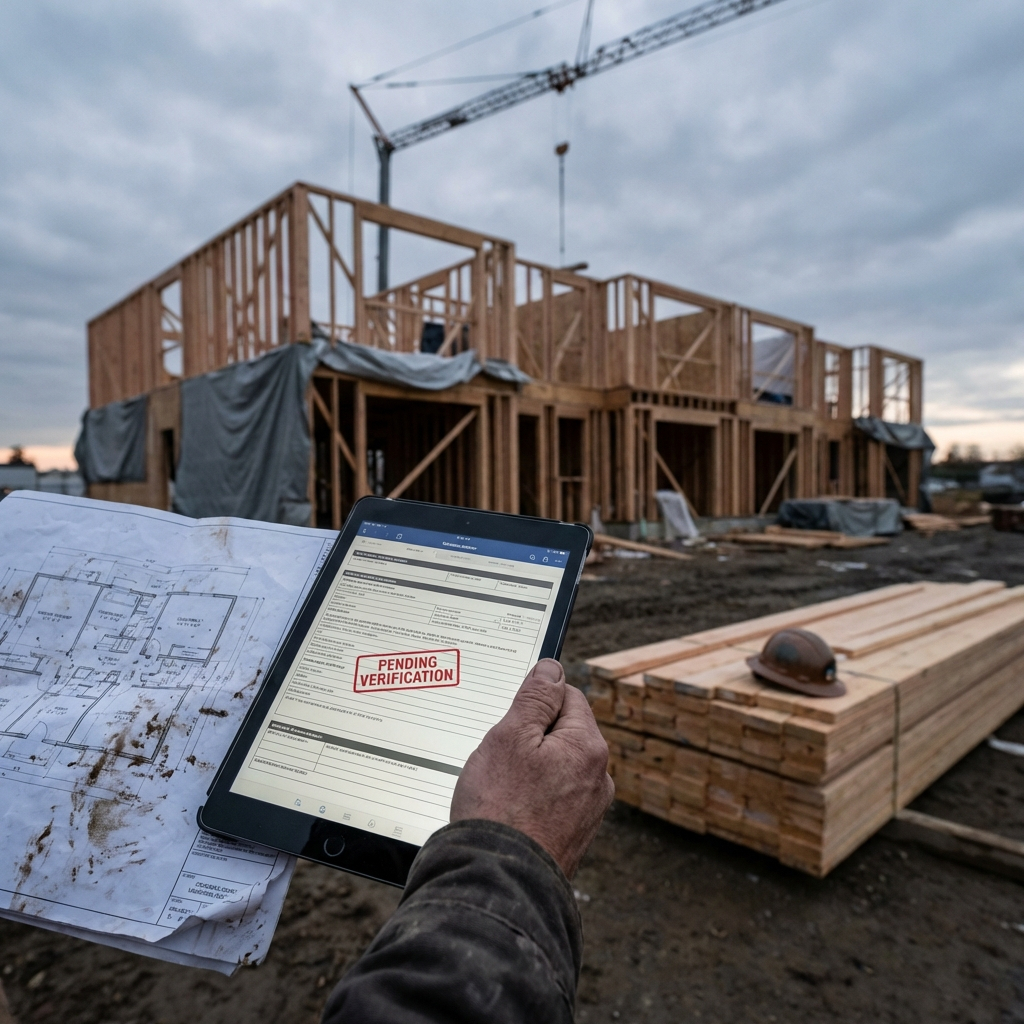
TL;DR: Affordable housing projects aren’t failing because there’s no money. They’re failing because paper-based delivery documentation creates verification delays stalling construction. Digital POD systems fix this with instant, verifiable documentation (timestamps, GPS coordinates, photos).
Here’s What You Need to Know
-
Documentation failures kill more affordable housing projects than funding gaps (yes, even when millions in grants get allocated)
-
Verification delays stall projects mid-stream, so starts outpace finished units
-
Paper PODs force projects to move at paper speed, not construction speed
-
Digital PODs give you instant verification with timestamps, GPS coordinates, and photos (no more weeks of manual review)
-
Real-time documentation means lenders approve draws faster and contractors keep momentum
The Funding vs. Execution Gap
We’re watching affordable housing projects get funded, approved, and celebrated all over the country. Federal grants flow. Developers submit proposals. Nonprofits partner with builders.
Then the projects stall.
The Federal Home Loan Bank of Cincinnati allocated $51.9 million for nearly 3,000 affordable housing units. Real money. Real opportunity. But here’s what nobody talks about in those press releases: documentation failures kill more affordable housing projects than funding gaps.
Bottom Line: The money’s there, but verification bottlenecks stop execution cold.
What Is the Hidden Documentation Bottleneck?
Material costs surged 43% since the pandemic. Tariffs tack on nearly $11,000 to every new single-family home. Regulatory costs eat a quarter of the purchase price.
Everyone sees those numbers. What they miss is the documentation crisis hiding underneath.
California’s 2026 construction laws emphasize “timely notice and documentation” for change orders and disputes. FHA construction loans need detailed documentation: construction plans, timelines, cost estimates. Affordable housing loan applications demand up to 17 separate documents before you even start.
Projects wait a year to get funds in place. Not because the money isn’t there. Because verification takes forever when your documentation lives on paper.
Here’s the Truth: Paper-based verification creates year-long delays even after funding gets approved.
How Do Material Delivery Delays Break Affordable Housing Projects?
Construction crews build only as fast as they receive materials. When suppliers don’t give accurate delivery times, everything downstream fails.
Here’s the domino effect:
-
Plumbing gets delayed
-
Electrical work stalls
-
Permits expire
-
Project completion gets postponed
Profits? Gone.
Affordable housing projects operate on razor-thin margins. A single documentation delay means the difference between completing 30 units and completing zero.
The Reality: Delivery documentation delays compound into project failures when you’re operating on margins this thin.
What Does the Completion Gap Tell Us?
Housing starts fell 7.8% in October 2025. Building permits dropped 1.1%. But here’s what everyone misses: the sharp drop in completions compared to starts means projects are taking longer because of material and documentation hurdles.
Projects aren’t failing at the funding stage. They’re stalling mid-stream where verification becomes a bottleneck.
Developers in one state got construction cost estimates in November. Two months later? Those same estimates came back $750,000 and $500,000 higher. The volatility around lumber and building material prices creates budget gaps and strains deals. State housing agencies scramble to throw additional tax credits at developments facing these cost increases.
The chaos gets worse when documentation doesn’t keep pace with reality.
The Pattern: Projects secure funding but fail to finish because documentation moves slower than construction reality.
What Problems Do Digital PODs Solve?
Paper proof of delivery systems weren’t built for what we’re dealing with: 22.6 million renter households facing cost burdens and over 770,000 people experiencing homelessness.
Digital PODs give you:
-
Timestamps (exact delivery times)
-
GPS coordinates (verified delivery locations)
-
Photos (visual proof of condition)
-
Instant notifications (real-time alerts to everyone who needs them)
So what does this mean for you? Material providers verify deliveries in real time. Contractors get visibility without chasing paperwork. Lenders reduce risk automatically, no more manually reviewing carbon copies weeks after delivery.
When documentation becomes instant and verifiable, your projects move at construction speed instead of paper speed.
The Advantage: Digital PODs eliminate the gap between delivery and verification. No more bottlenecks stalling your projects.
Why Is This an Infrastructure Problem, Not a Funding Problem?
Affordable housing doesn’t need more funding announcements. What you need is the infrastructure to execute on the funding already sitting there.
Digital proof of delivery systems eliminate the documentation delays turning $51.9 million in allocated funding into years of waiting. They remove the verification bottlenecks causing completion gaps. They create real-time transparency, so lenders approve draws faster and contractors keep momentum.
This isn’t about disrupting construction. It’s about digitizing the obvious.
When delivery documentation works the way it should, affordable housing projects stop stalling mid-stream. They start housing the people who need them most.
Final Point: Affordable housing has the funding. What’s missing is the execution infrastructure to deploy it.
Key Takeaways
-
Documentation failures, not funding gaps, kill most affordable housing projects (even when millions in grants get allocated, verification delays stall execution)
-
Paper-based POD systems create a speed mismatch (projects move at paper speed instead of construction speed, creating completion gaps)
-
Digital PODs give instant verification (timestamps, GPS coordinates, photos eliminate weeks of manual review)
-
Affordable housing operates on razor-thin margins (one documentation delay means the difference between 30 finished units and zero)
-
Real-time documentation speeds up the entire project (lenders approve draws faster, contractors keep momentum, materials get verified instantly)
-
This is an infrastructure problem, not a funding problem (the money exists, the execution systems need modernization)
-
The solution is digitizing the obvious (moving delivery documentation from paper to digital removes the bottleneck stopping affordable housing from reaching people who need it)
